
A favourite ring loses its sparkle slowly. Soap, hand cream and everyday wear collect in the tiny gaps behind a setting, and a soft brush can't always reach them. Ultrasonic cleaning can, often in just a few minutes.
It isn't right for every piece, though. The same action that lifts away grime can harm pearls, opals and other delicate materials. This guide shows you what's generally safe, what to keep out of the tank, and why.
The short answer
- Generally safe: solid gold, platinum and other solid metals, diamonds, and hard, untreated stones such as ruby, sapphire, citrine and cubic zirconia.
- Use caution or avoid: pearl, opal, emerald, amber, turquoise, obsidian, wood and costume jewellery.
- Not sure? Clean the piece by hand or ask a professional jeweller.
What jewellery can you clean?
Ultrasonic cleaning works best on solid metal and hard, non-porous stones. Pieces that are soft, porous, glued or heavily treated need more care.
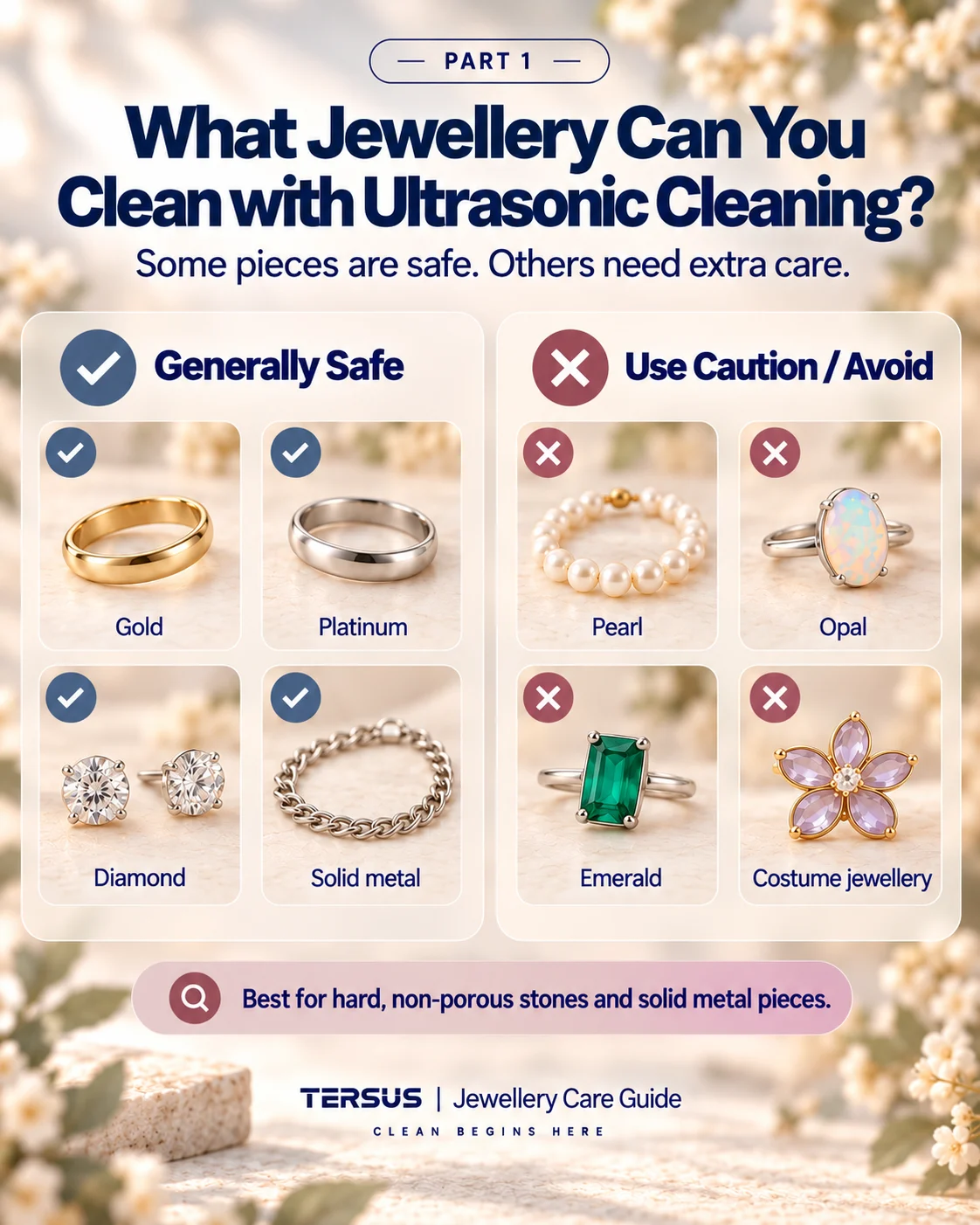
Generally safe
- Gold: solid rings, chains and bands.
- Platinum: a dense, hard-wearing metal that copes well with regular cleaning.
- Diamond: the hardest natural material, as long as it hasn't been fracture-filled or coated.
- Solid metal: plain pieces with no glue, plating or surface coating.
Use caution or avoid
- Pearl: soft and organic, often held by glue or silk thread.
- Opal: naturally fragile and prone to fine cracks. Some opals are also glued in layers.
- Emerald: usually has natural inclusions and is often treated with oil or resin.
- Costume jewellery: plating can wear and glued stones can come loose.
More materials and stones
The same rule applies to the rest of your jewellery box. Hard, untreated stones and solid metals are usually safer. Organic, porous or brittle pieces need extra care.
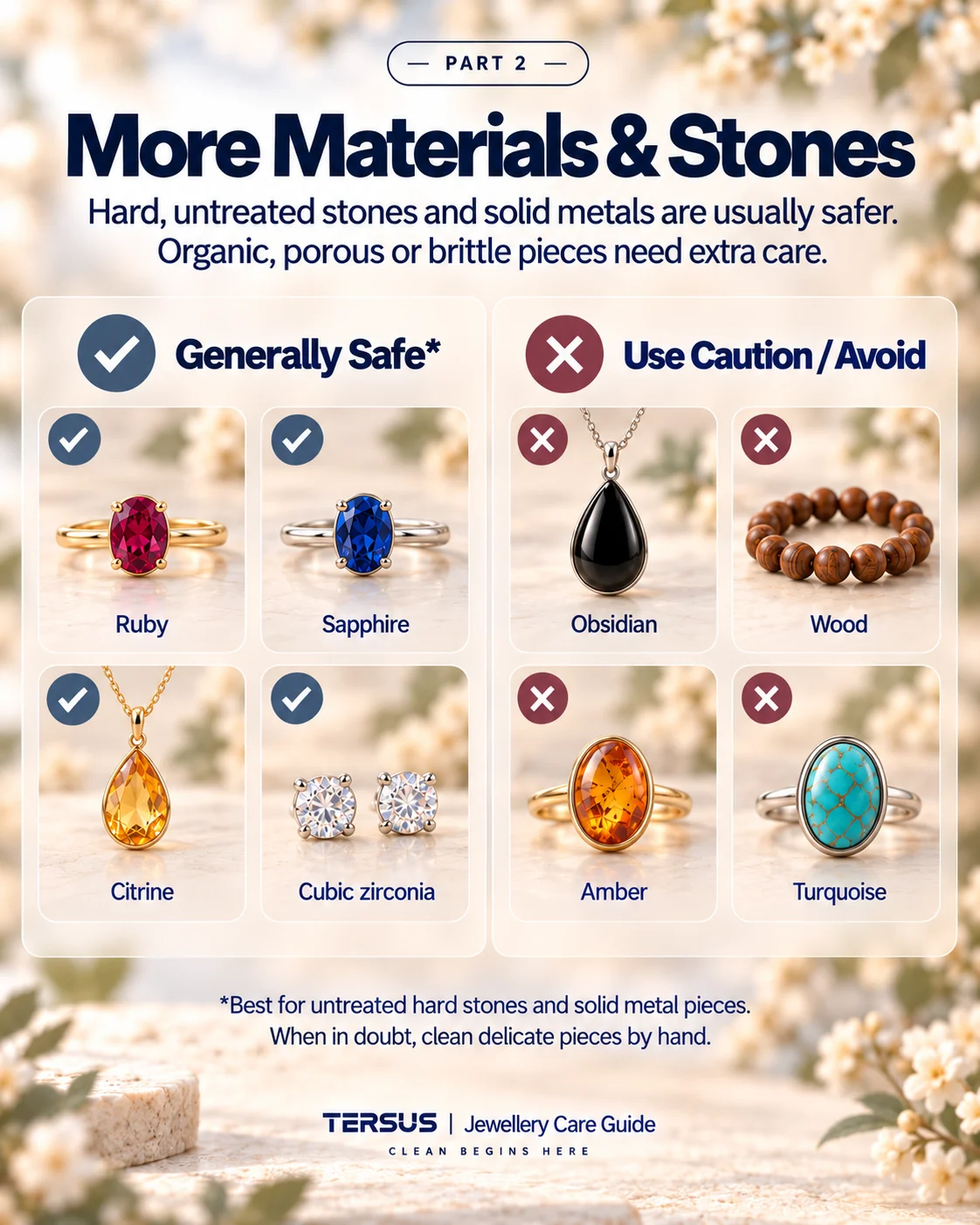
Generally safe, if untreated
- Ruby and sapphire: very hard stones, but skip any that are glass-filled, fracture-filled or dyed.
- Citrine: a durable quartz. Avoid stones with visible cracks.
- Cubic zirconia: hard and stable, provided the stones are set rather than glued.
Use caution or avoid
- Obsidian: a natural glass that is brittle and can chip.
- Wood: absorbs water, which can make it swell or split.
- Amber: a soft fossilised resin that marks easily.
- Turquoise: porous and often stabilised, so it can absorb liquid and discolour.
Many coloured stones are treated, and treatments aren't always easy to spot. If you don't know a stone's history, treat it as delicate.
How ultrasonic cleaning works
An ultrasonic cleaner sends high-frequency sound waves through water. These create tiny bubbles that form and collapse against every surface, a process called cavitation. It's this action that lifts dirt out of the small spaces a brush can't reach.
Those bubbles can't tell dirt from a weak spot, which is why some jewellery gets damaged.
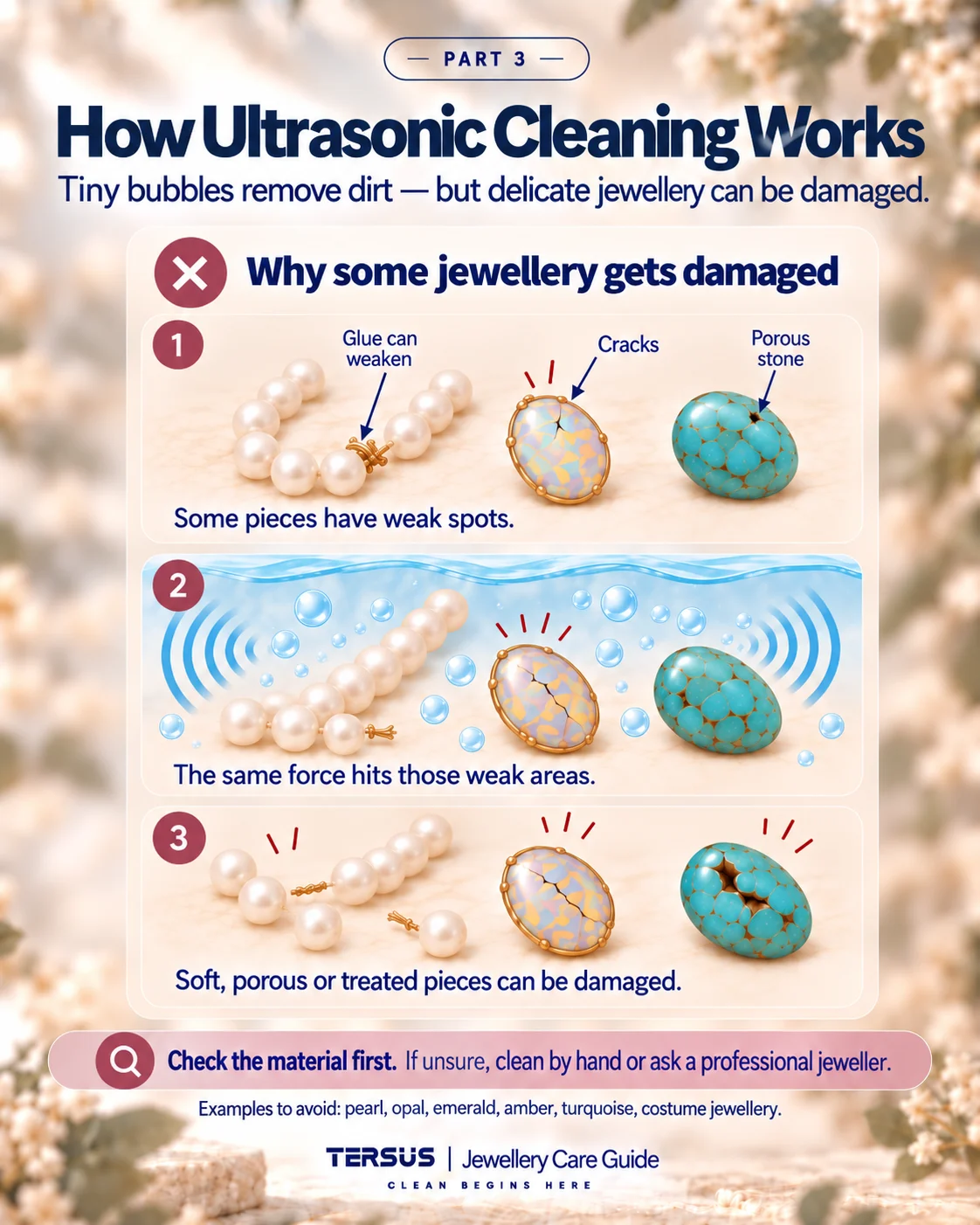
- Some pieces have weak spots. Glue can weaken, cracks can hide below the surface, and porous stones have tiny openings.
- The same force hits those weak areas. The waves and bubbles reach every part of the piece, not only the dirt.
- Soft, porous or treated pieces can be damaged. Glued fittings can fail, cracks can spread and porous surfaces can break down.
Before you press start
A quick check takes less than a minute and is well worth doing.
- Check the material. Confirm the metal and stone first. On gold or platinum, a hallmark is a helpful clue.
- Inspect the settings. If a stone feels loose or a claw looks worn, see a jeweller before cleaning.
- Give each piece space. Keep pieces apart so they don't knock against one another.
- Rinse and dry. Finish with clean water and pat dry with a soft cloth.
When in doubt, clean by hand
For anything delicate, a gentle hand clean is the better choice. Use lukewarm water, a drop of mild soap and a soft brush, then rinse and dry carefully. For pearls, opals and amber, a soft, slightly damp cloth is usually enough.
If a piece is valuable, an heirloom or hard to replace, ask a professional jeweller for advice first.
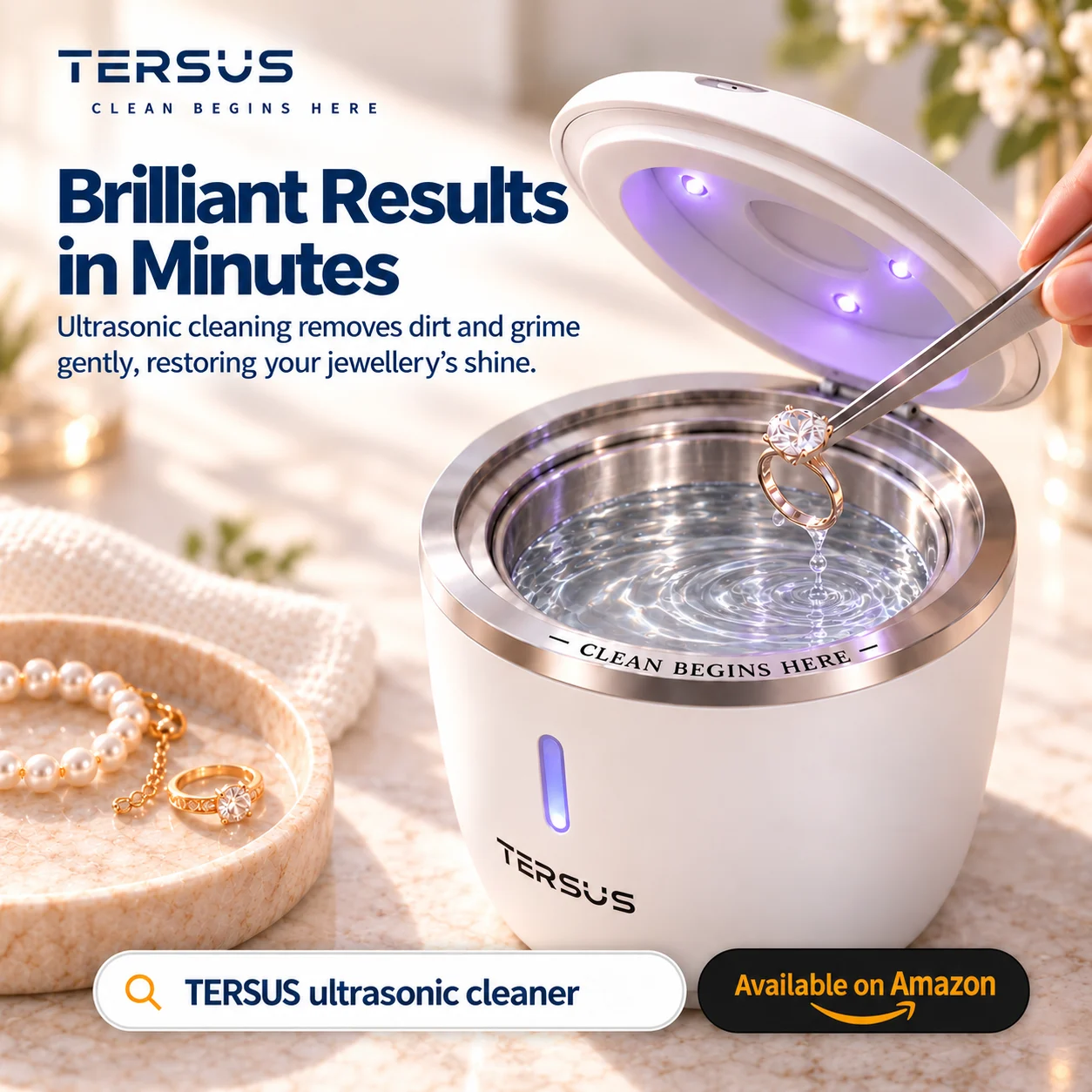
A simple clean for suitable pieces
Once you've checked a piece is suitable, the TERSUS UV Ultrasonic Cleaner keeps the routine simple. One button gives you four modes, with cycles of 5 to 10 minutes. The 200 ml cleaner comes with a tray and tweezers.
View on Amazon UKThis guide offers general care advice. If your jeweller or the manufacturer gives different instructions for a piece, follow those instead.